In the fast-paced urban environment of Brooklyn, your refrigerator is arguably the most essential appliance in your home. From storing fresh produce from the local farmers’ market to keeping meal-prepped dinners safe for the week, it is the backbone of your kitchen. However, when the temperature inside starts to rise, the situation quickly escalates from a minor annoyance to a high-stakes emergency.
For Brooklyn homeowners, a warm refrigerator doesn’t just mean lukewarm milk; it means potential food poisoning and the loss of hundreds of dollars in groceries. Whether you reside in a historic brownstone in Brooklyn Heights or a high-rise in Downtown Brooklyn, understanding the mechanics of cooling failure is vital. This guide explores the three most common reasons refrigerators stop cooling and provides a roadmap for when you can handle it yourself and when you need to call in a professional for appliance repair company
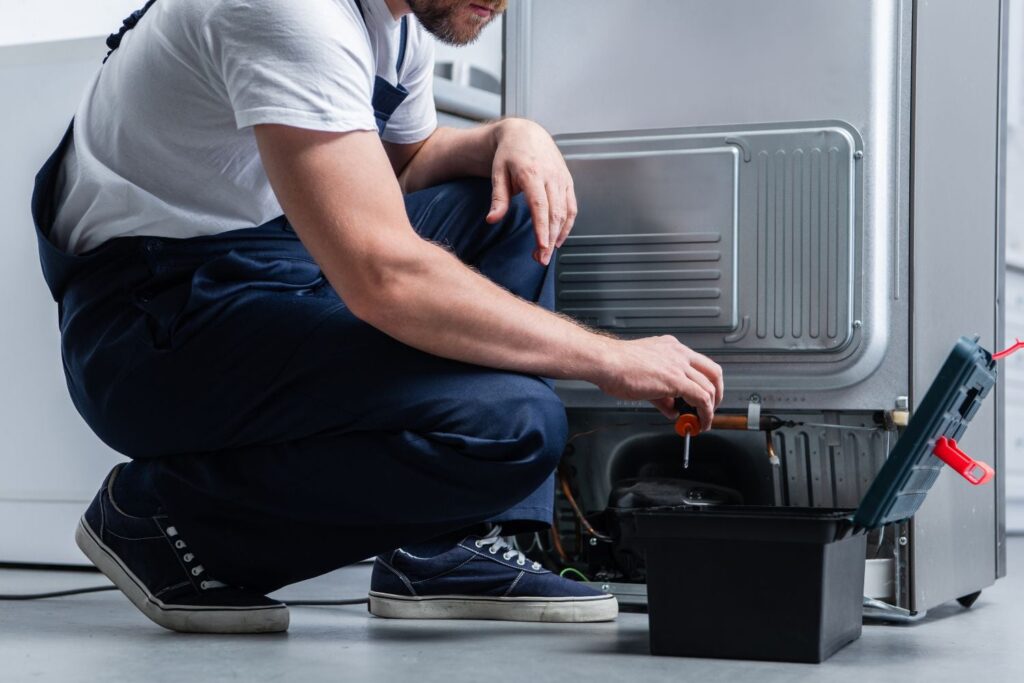
The most common yet most overlooked reason for a cooling failure is the accumulation of dust and debris on the condenser coils. These coils are responsible for dissipating the heat removed from the inside of your refrigerator. If the heat cannot escape, it stays inside, causing the internal temperature to rise.
Brooklyn’s unique urban environment contributes significantly to this issue. Many apartments are located near busy streets where outdoor dust easily infiltrates living spaces. Furthermore, the compact nature of NYC kitchens often means refrigerators are tucked into tight enclosures with minimal airflow. If you have pets that shed, their fur acts like a magnet for these coils, creating a thick “blanket” that traps heat.
As the coils become insulated by this layer of grime, the compressor must work significantly harder and longer to achieve the desired temperature. This leads to a dangerous cycle where the compressor overheats and eventually shuts down entirely as a safety precaution. Beyond the risk of total failure, an overworked refrigerator consumes significantly more electricity, which you will notice as a spike in your monthly utility bills. The prolonged exposure to excessive heat also causes premature wear and tear, shortening the lifespan of expensive internal components and leading to costly long-term damage.
If you notice that your freezer is still freezing ice cubes perfectly but the refrigerator section is reaching room temperature, the culprit is almost certainly the evaporator fan motor. Most modern refrigerators use a single cooling source located in the freezer compartment. The evaporator fan serves as the essential delivery system that pulls that frigid air and pushes it through a series of dedicated vents into the fresh food section to maintain the proper climate
The fan’s ability to move air is what keeps your perishables safe. In many Brooklyn households, especially those with high-usage kitchens, this motor runs for a significant portion of the day. If the motor fails, the cold air produced by the evaporator coils remains trapped within the freezer walls. This results in a “split-temperature” crisis where your ice cream remains frozen, but your milk, eggs, and vegetables in the main compartment begin to warm up to dangerous levels
Identifying a failing fan motor requires paying close attention to the sounds your appliance makes during the day. A motor that is nearing the end of its life often produces a high-pitched squealing, chirping, or a low-frequency growling sound, which is usually the result of worn-out bearings within the motor housing. In other cases, you might notice a complete and total silence; if you open the freezer door and do not hear the faint hum of a fan, the motor has likely suffered an electrical failure or has been physically seized by an internal obstruction.
The third and perhaps most technical reason for a cooling failure is a breakdown in the “Auto-Defrost” system. Modern refrigerators are designed to be frost-free, meaning they automatically melt away the frost that naturally accumulates on the cooling coils every few hours. This system relies on a delicate balance between several components, and if any single one of them malfunctions, the entire cooling process is compromised.
This system is managed by a defrost timer or control board, which acts as the brain of the operation by switching the unit from cooling mode to defrost mode. A defrost heater then physically melts the ice off the coils, while a defrost thermostat monitors the temperature to ensure the heater does not stay on too long and damage the unit. This complex interaction ensures that the coils remain clear for maximum heat absorption.
When the defrost cycle fails, the evaporator coils become encased in a solid, thick block of ice. This ice acts as an insulator, preventing the refrigerant inside the coils from absorbing heat from the air. Homeowners often try to fix this by manually defrosting the unit, which involves unplugging the fridge for a day. While this will restore cooling temporarily, the ice will inevitably return within a week because the underlying mechanical failure remains. Diagnosing whether the problem lies with a burnt-out heater, a faulty thermostat, or a malfunctioning control board requires specialized tools and is a common reason to seek professional refrigerator repair in Brooklyn.
While DIY videos make appliance repair look simple, refrigerators are complex machines containing sensitive electronics and pressurized refrigerant gases. Attempting to repair a unit without proper training can lead to voided warranties, as many manufacturers require certified technicians to perform any internal work. There are also significant safety hazards involved, including the risk of electrical shock or accidentally puncturing a refrigerant line, which can release harmful gases into your home.
Bartleys Appliances understands the specific needs of Brooklyn residents. We know that when your fridge goes down, you need a technician who arrives on time, has the right parts in their van, and respects your living space. Our focus is on restoring your kitchen’s functionality with minimal disruption to your daily life. By choosing a professional service, you ensure that your appliance is restored to factory standards, helping you avoid the much higher cost of a full replacement.
According to the USDA, food stays safe in a closed refrigerator for about four hours without power or cooling. A full freezer can hold its temperature for about 48 hours if the door remains shut, but once the internal temperature rises above 40°F, perishable items like meat and dairy become high-risk for bacteria. If your fridge is warm, you should seek same-day appliance repair to save your inventory.
This is often related to a cooling issue. If your defrost drain is clogged or frozen, the water that melts during the defrost cycle has nowhere to move through the internal plumbing. It eventually overflows the drain pan and leaks into the bottom of the fridge or onto your floor. This blockage can also lead to humidity issues that interfere with the evaporator fan’s ability to circulate air.
For optimal food safety and energy efficiency, your refrigerator should be set at exactly 37°F (3°C) and your freezer should be maintained at 0°F (-18°C). If your unit cannot maintain these specific temperatures despite being set correctly on the digital display, it is a clear sign of an internal mechanical problem that requires a professional diagnostic.
Most high-quality refrigerators have a lifespan of 10 to 14 years. If your unit is less than eight years old, a repair is almost always the most cost-effective and eco-friendly solution. For units older than 12 years, we provide an honest assessment based on the cost of the parts; if the repair exceeds half the cost of a new unit, we will help you weigh your options.

Our goal is to provide the highest level of service and ensure your complete satisfaction. We pride ourselves on our professionalism, attention to detail, and commitment to customer care. From the moment you contact us to the completion of your repair, we’re dedicated to making the process as smooth and stress-free as possible.
Schedule your home appliance repair online – 24/7 availability